

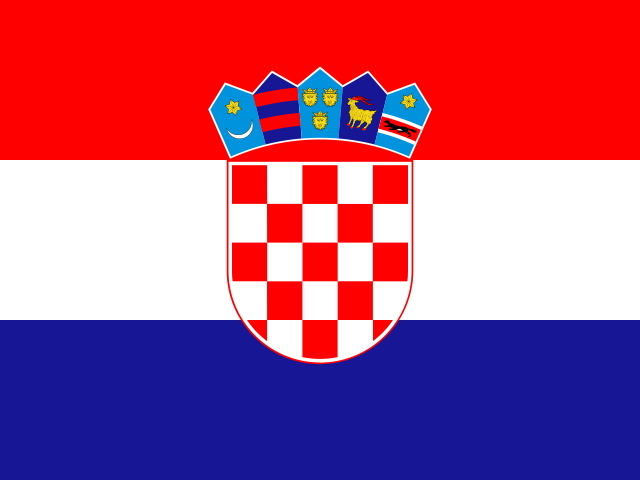
 Croatia
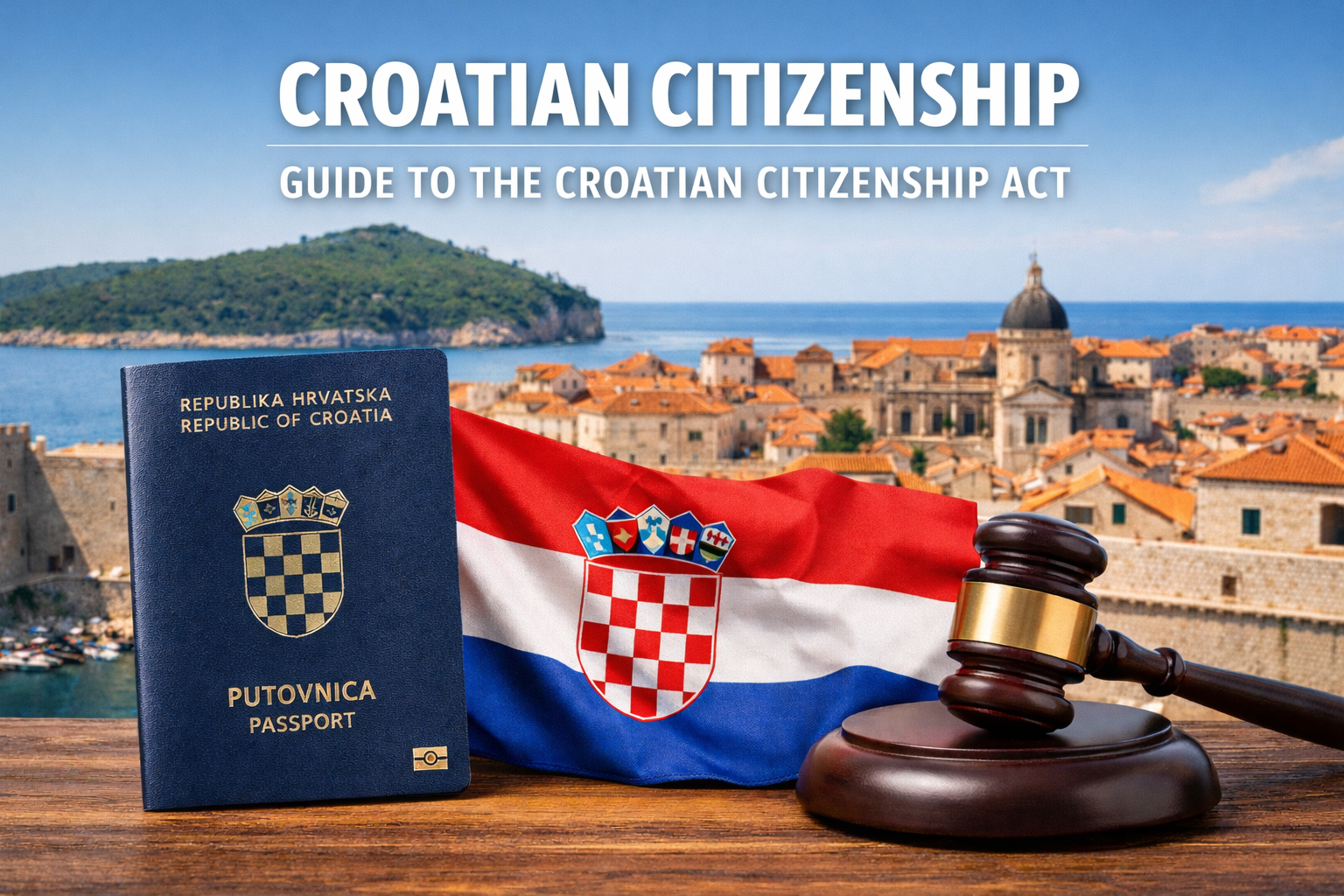
Croatian citizenship is governed by the Croatian Citizenship Act (Zakon o hrvatskom državljanstvu), which regulates the acquisition, loss, and recognition of citizenship of the Republic of Croatia.
This legislation establishes the legal framework defining the relationship between individuals and the Croatian state and sets out the conditions under which a person may become a Croatian citizen or lose that status.
For individuals with family ties to Croatia, long-term residents, or members of the Croatian diaspora, understanding the legal pathways to citizenship is essential.
Ways to Acquire Croatian Citizenship
According to the law, Croatian citizenship can be acquired through four main legal pathways:
By descent
By birth in the territory of the Republic of Croatia
By naturalization
Based on international treaties
Each of these mechanisms reflects different legal principles used to determine nationality.
Citizenship by Descent
The most common way to obtain Croatian citizenship is citizenship by descent (jus sanguinis).
A child automatically acquires Croatian citizenship if:
both parents are Croatian citizens at the time of birth, or
one parent is a Croatian citizen and the child is born in Croatia.
Citizenship may also be acquired by:
children adopted by Croatian citizens;
individuals born abroad to at least one Croatian parent, provided they are registered with Croatian authorities within the legally prescribed timeframe.
These provisions are particularly important for members of the Croatian diaspora, allowing descendants of emigrants to maintain legal ties with Croatia.
Citizenship by Birth in Croatia
In specific circumstances, citizenship may be granted to children born or found in the territory of Croatia when:
their parents are unknown,
their parents are stateless, or
their parents’ nationality cannot be determined.
This provision aims to prevent situations of statelessness, ensuring that such children obtain a nationality.
Citizenship by Naturalization
Foreign nationals may obtain Croatian citizenship through naturalization, provided that they meet the legal requirements established by the Citizenship Act.
The main conditions include:
being at least 18 years old;
having or proving the possibility of renouncing previous citizenship;
residing legally in Croatia for at least eight continuous years;
holding permanent residence status;
demonstrating knowledge of the Croatian language, Latin script, culture, and social system;
respecting the legal order of the Republic of Croatia and not posing security risks.
Knowledge of the Croatian language and culture is assessed through a specific verification process regulated by secondary legislation.
Special Cases of Naturalization
The Croatian Citizenship Act also provides simplified pathways to citizenship in certain situations.
Marriage to a Croatian Citizen
A foreign national married to a Croatian citizen may acquire Croatian citizenship if they:
reside in Croatia, and
hold permanent residence status.
In these cases, some of the standard naturalization requirements may be waived.
Descendants of Croatian Emigrants
One of the most distinctive aspects of Croatian citizenship law is the possibility for Croatian emigrants and their descendants to acquire citizenship under simplified conditions.
In these cases, applicants may obtain citizenship even if they do not meet all standard naturalization requirements, such as long-term residence in Croatia.
The law defines an emigrant as a person who left Croatia before 8 October 1991 with the intention of living permanently abroad.
Citizenship in the Interest of the State
Croatian citizenship may also be granted when the admission of a foreign national represents a particular interest for the Republic of Croatia.
In such cases, the competent authorities may waive certain naturalization requirements.
Application Procedure and Competent Authorities
Citizenship procedures are primarily administered by the Croatian Ministry of the Interior (Ministarstvo unutarnjih poslova – MUP).
Applications may be submitted:
at competent police administrations in Croatia, or
through Croatian embassies and consulates abroad.
Applicants who obtain citizenship through naturalization must also take a formal oath of allegiance to the Constitution and legal order of the Republic of Croatia.
Loss of Croatian Citizenship
Croatian citizenship may cease in three main situations:
release from citizenship upon request,
voluntary renunciation,
provisions established by international treaties.
The release or renunciation of citizenship is subject to specific legal conditions, including the absence of pending legal obligations toward the Croatian state.
Conclusion
The Croatian Citizenship Act establishes a comprehensive legal framework that combines the principle of descent with naturalization procedures and special provisions for members of the Croatian diaspora.
For many individuals—particularly those with Croatian ancestry or those planning long-term residence in the country—Croatian citizenship represents not only a legal status but also access to the rights and opportunities associated with European Union citizenship.
Careful evaluation of eligibility and legal requirements is essential to determine the most appropriate pathway to Croatian citizenship.
Need More Information?
If you have questions about moving to Europe or need personalised guidance, our partner network is here to help. We connect you with expert professionals specialised in immigration, job placement and relocation services.
Connect with our trusted partners who can guide you through every step of your European journey.
Find a Partner